 Microsoft is expanding passwordless security across Windows by introducing passkey authentication through Microsoft Entra. The new capability allows users to sign in to Entra-protected resources using Windows Hello instead of traditional passwords, adding stronger resistance against phishing attacks and credential theft.
The feature will roll out as an opt-in public preview starting in mid-March 2026 and continuing through late April for global Microsoft 365 tenants. Government cloud environments will receive the preview shortly after, with deployments scheduled between mid-April and mid-May. Once enabled, the update allows organizations to adopt passkeys as an authentication method on Windows devices. [Read more…]
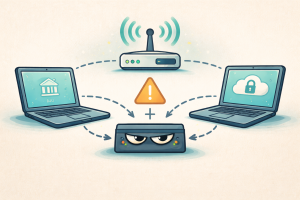
 For decades, modern encryption has rested on a simple assumption. Some math problems take so long to solve that no practical computer can crack them in a useful timeframe. That assumption built online banking, secure email, VPN tunnels, software signing, and almost every digital transaction that powers business and government today.
 A new attack called Pixnapping can steal sensitive data from Android devices, without needing a single permission. The exploit targets visual data on-screen, including two-factor authentication codes, private messages, and location histories. It works by quietly measuring how long it takes to render specific pixels. If that sounds like science fiction, it’s not. Researchers have already tested it on Pixel and Samsung devices with unsettling results.
 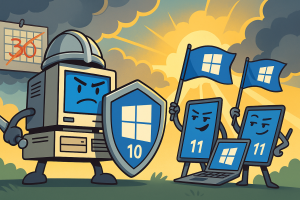 After nearly a decade, Microsoft is finally closing the book on Windows 10. As of today, free support and regular security patches have officially ended. But despite the headlines, your computer is not about to implode. If you plan wisely, or even just use decent security software, you can keep running Windows 10 safely for a quite a bit longer.