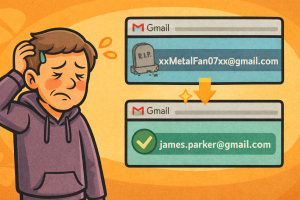
 Google is finally undoing one of Gmail’s longest standing frustrations. Users who have been stuck for years with outdated or embarrassing email addresses now have a way out that does not involve starting over. A newly updated Google support document confirms that Gmail accounts can now be assigned a new address while keeping the same account, inbox, and data intact.
The change is not yet visible everywhere. The updated instructions appear only on Google’s Hindi language help page, which suggests the feature is rolling out first in India or other Hindi speaking regions. The English version of the same page still says Gmail addresses usually cannot be changed, a contradiction that points to a slow and phased launch rather than a global switch flipped overnight. Google has not publicly announced the change or provided a rollout schedule.
When the feature becomes available, users will be able to select a new @gmail.com address without creating a new account. All existing emails, files, photos, and settings stay exactly where they are. Google services such as Drive, Maps, and YouTube continue to work without interruption. The original Gmail address remains active as an alias, meaning messages sent to the old address still land in the same inbox. Sign in also continues to work with the original address, which reduces the risk of lockouts or broken app connections.
This is a significant shift from Google’s long held position. For years, the only option for changing a Gmail address was to create a brand new account and manually migrate data. That process often caused problems with paid subscriptions, app integrations, and saved logins. For users with a long digital history tied to one address, the risk alone was enough to keep them stuck with names they outgrew decades ago.
The updated policy comes with limits. Once a Gmail address is changed, users cannot create another new Gmail address for twelve months. The newly chosen address also cannot be deleted. Google does allow the original address to be reused later if the user decides to revert, but the cooldown period makes it clear this is not meant to be a cosmetic feature people cycle through casually.
Google has not explained why the update is appearing quietly or why it surfaced first in a non English support page. Reports suggest the change was first noticed by users in online forums rather than through official channels. That low key approach is unusual for a company that typically promotes even minor account updates. It may also reflect caution, as email address changes touch authentication, identity, and security systems that Google manages at massive scale.
If the rollout continues as described, this will be one of the most user friendly Gmail changes in years. It gives people a way to clean up their digital identity without breaking everything else they rely on. The only real question now is how long it takes before the option appears for everyone else.
